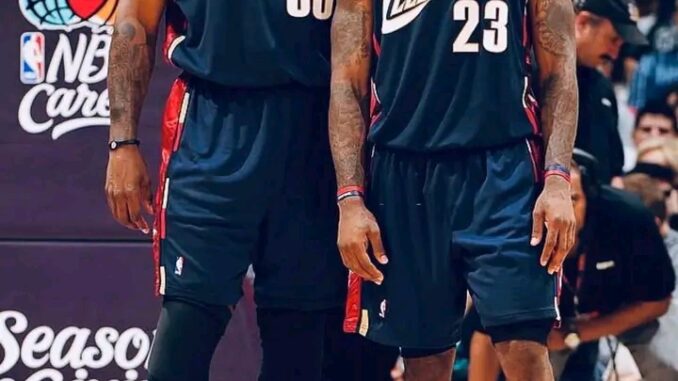
You gotta be a SORRY ASS leader and player to not win with Shaq. LOL. And I don’t mean that lightly—I mean that in the most direct, no-excuses, basketball-purity kind of way.
We’re talking about a once-in-a-lifetime force. A walking mismatch. A guaranteed double team before he even touched the ball. Shaq wasn’t just dominant—he bent the entire game around him. Defenses collapsed, rotations broke down, and opposing big men looked like they needed a prayer, not a game plan.
So if you were on the court with that kind of gravity, that kind of presence, that kind of guaranteed attention from the defense—and you STILL couldn’t turn that into consistent winning? That says more about you than it does about him.
Because let’s be real: playing with Shaq meant you had space. You had open looks. You had less pressure on every possession because the defense’s number one priority was NOT you. That’s a luxury most players never get in their careers.
Great leaders elevate that situation. They take advantage of it. They understand timing, spacing, trust, and sacrifice. They don’t fight the system—they maximize it. They don’t let ego get in the way of easy dominance.
But if you’re out there missing the moment? If you’re clashing instead of connecting? If you’re worried about “who’s the man” instead of “how do we win”? Then yeah… that’s on you.
Because the blueprint is simple:
Feed the monster.
Play off the monster.
Win because of the monster.
It’s not complicated. It’s not abstract. It’s not some advanced basketball theory. It’s common sense wrapped in championship opportunity.
And yet, not everybody could handle it.
Why? Because leadership isn’t just talent. It’s maturity. It’s awareness. It’s knowing when to step up and when to step aside. It’s being secure enough in your greatness to let someone else dominate if that’s what the game requires.
Some players want to shine more than they want to win. Some leaders want control more than they want results. And when you put that mindset next to a generational force like Shaq, it creates friction instead of fire.
That’s the difference between dynasties and disappointments.
You look at the greats—the ones who figured it out—they didn’t waste that opportunity. They leaned into it. They understood the assignment. They recognized that playing alongside someone like Shaq wasn’t a limitation—it was a cheat code.
And if you couldn’t see that? If you couldn’t adapt? If you couldn’t lead in a way that brought the best out of that situation?
Then yeah… you gotta hold that.
Because history doesn’t care about excuses. It remembers results.
And having Shaq on your team with nothing to show for it? That’s a stain you can’t really wash off. Not when people know what was right there in front of you.
So laugh if you want, debate if you want, spin it however you need to—but the truth stays the truth:
You gotta be a sorry ass leader and player to not win with Shaq. Period.


Be the first to comment