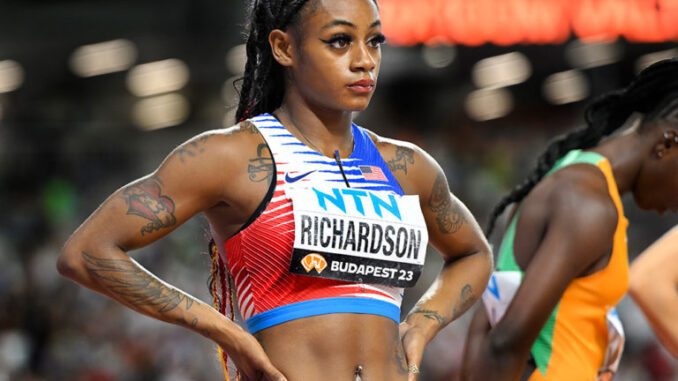
As of April 16, 2026, Olympic sprinter Sha’Carri Richardson’s scheduled court hearing related to her “super speeding” arrest in Florida has been officially postponed, adding a new layer of uncertainty to a case that has already drawn widespread public attention.
Richardson, known globally for her explosive speed on the track and unapologetic personality off it, was arrested earlier this year following allegations that she was driving at an extremely high speed—reportedly well above the legal limit—on a Florida highway. The incident quickly made headlines, not only because of the severity of the alleged offense but also due to Richardson’s high-profile status as one of the most recognizable figures in athletics.
The postponement of the hearing means that, for now, there will be no immediate legal resolution. While specific reasons for the delay have not been fully disclosed, court postponements are not uncommon in cases that involve complex legal considerations, scheduling conflicts, or ongoing negotiations between legal teams. In high-profile cases such as this, additional time may also be used to review evidence, assess procedural matters, or explore potential plea arrangements.
Public reaction to the situation has been mixed. Some fans have expressed concern over the seriousness of the allegations, emphasizing the importance of accountability regardless of celebrity status. Others have urged patience, pointing out that legal processes take time and that Richardson, like anyone else, is entitled to due process and a fair hearing.
This incident comes at a critical moment in Richardson’s career. After overcoming previous setbacks and reestablishing herself as one of the top sprinters in the world, she has been seen as a symbol of resilience and comeback. Her performances on the international stage have reminded fans of her undeniable talent, making this legal issue all the more impactful on her public image and professional trajectory.
In the broader context, the case also highlights ongoing conversations about athletes and public responsibility. High-profile figures often live under intense scrutiny, where personal actions can quickly become global news. Situations like this tend to spark debates about whether public figures are held to higher standards—and whether they should be.
At the same time, it’s important to separate legal allegations from confirmed outcomes. A postponed hearing does not imply guilt or innocence; it simply indicates that the judicial process is still underway. For Richardson, the next steps will depend on how the case progresses once a new court date is set.
Legal experts often note that delays can sometimes benefit defendants by providing more time to prepare a strong defense. However, they can also prolong public speculation and media attention, which can be challenging for anyone involved—especially someone constantly in the spotlight.
Richardson herself has not made an extensive public statement regarding the postponement, and it remains unclear how the situation may affect her immediate plans, including training and upcoming competitions. Athletes at her level typically operate on highly structured schedules, and legal distractions can complicate both preparation and performance.
As the story continues to unfold, many will be watching closely—not just for updates on the legal proceedings, but also for how Richardson navigates this moment personally and professionally. Her ability to maintain focus and composure in the face of adversity has been a defining aspect of her career so far.
For now, the postponement leaves more questions than answers. When will the new hearing take place? What evidence will be presented? How might the case ultimately be resolved? These are all uncertainties that will only be addressed in time.
What remains clear is that this situation serves as a reminder of how quickly circumstances can shift, even for those at the peak of their careers. Whether on the track or in life, moments of challenge often become defining chapters.
As of now, all eyes remain on the next development in the case—and on Richardson herself, as she continues to balance her role as an elite athlete with the realities of an ongoing legal matter.

Be the first to comment